วันพุธที่ 4 กุมภาพันธ์ พ.ศ. 2552

Travel Tips For Getting Through the Airport Easier and Quicker

Traveling is different now than it was before 9/11. Arriving at the airport even earlier than before, standing in line longer while waiting to pass through security, having luggage x-rayed, and being pulled aside for random security checks make the time it takes to travel more lengthy than it used to be. Planning ahead can shave off a few minutes here and there and hopefully make your travels less frustrating. Here are some things I have found to be helpful when traveling:

<li><B> Make a list. Other than clothes, write down everything you need to take with you (camera, film, sun screen, hand sanitizer, book, etc.) and pack it ahead of time. This will avoid taking extra time to put it in your suitcase or bag at the last minute since you have to arrive at the airport earlier now.</B></li>

<li><B> Before you leave home, put your jewelry and watch in a little cosmetic bag down inside the bag you carry on the plane and put your jewelry on once you've passed through security. Since security has been tightened there is a good chance that you will beep and have to take it off anyway.</B></li>

<li><B> Remember to pack things such as fingernail kits (that include nail files, clippers, etc.) in the suitcase you will be checking and not in your carry-on bag. You are no longer allowed to carry these items on the plane.</B></li>

<li><B> Purchase a zippered pouch (I got mine at AAA) to keep your ID, boarding passes, e-ticket, and travel itinerary in. Then put the pouch in a side pocket of the bag you carry on the plane. Keeping this information together will keep you from digging for it each time you need it.</B></li>

<li><B> Try not to wear clothing that requires a belt (with buckle) or clothing that has any metal, metal buttons, or anything on it that would cause you to beep when you go through security. This will just slow down the process and you want to keep moving as quickly as possible.</B></li>

<li><B> If the airport you are departing from has curbside check-in, take advantage of it. It is often quicker than standing in line once you are inside the airport.</B></li>

Sometimes just remembering the little things will help you get through the airport smoothly and avoid those little delays that can give you a big headache.

Sherry Otto
<a target="_new" href="http://www.great-caribbean-vacations.com">http://www.great-caribbean-vacations.com</a>
Specializing in fun Caribbean vacations! Also offering travel tips, hot spots, and information about romantic vacations, beach vacations, sailing vacations, golf vacations, shopping vacations, and Caribbean cruises.

วันอังคารที่ 3 กุมภาพันธ์ พ.ศ. 2552

Fighter Jet Trainers Sport Planes

You want a fighter jet as your personal aircraft; do not deny it. You want to travel faster than the speed of sound and play Top Gun in the sky. Well, it may be possible soon for you to do this, if you have the cash of course. Having studied the possibilities and options for a Supersonic Jet Trainer for fighter aircraft, one might notice that there have been lots of recent media discussions and many solutions at this years Paris Airshow. One such aircraft is the Mako trainer by Mercedes Benz. Top speed 1050 mph. Many years back we used the T-38 an F-5 Tiger with two seats. These units are needed because before you put someone in an F-22 Fighter, which costs 100 million dollars, they better be able to fly the damn thing and fly it well. The Mako could also be a fighter if needed for small countries to be their Air Force. It can use either the EJ200 by Eurojet or an F414 by GE or even Snecma M88 (a company out of France trying to make itself popular in aerospace circles for lightweight high out put engines).

http://www.flug-revue.rotor.com/FRHeft/FRH9906/FR9906g.htm

They see this aircraft as an intro to the F-16 or F-22. Many third world countries go to Arizona and use old vintage A-4s for training or train in the desert in CA. This aircraft is long like the T-38 about 45 feet. Aviation Week had some interesting things to say about this project.

http://www.aviationnow.com/content/publication/awst/2002outlook/aw28.htm

However many companies are competing for these aircraft for trainers including the Koreans T-50, which we have discussed before and the price tag is good and they are readily available now while the Mako is about early 2003 bound and delivered in 2005. The US is now taking delivery of Raytheon's T-6A Texan 2 has the security of U.S. military procurement. Now as a matter of fact I talked to a training pilot in San Antonio who said they were getting their first ones in last June. Many Aerospace consultants in Europe believe this aircraft may take the lead around the world as the trainer of place. Many countries still are not exactly feeling good about buying the Korean T-50s.

http://www.hinduonnet.com/thehindu/biz/2002/01/03/stories/2002010300320200.htm

http://www.global-defence.com/air-eur.html

In any case what a wonderful fun and cool aircraft to have as a sport plane. You know you want one. Think about it.

"Lance Winslow" - If you have innovative thoughts and unique perspectives, come think with Lance; <a target="_new" href="http://www.WorldThinkTank.net/wttbbs">www.WorldThinkTank.net/wttbbs</a>

Tactile Strip Sensors on Leading Edge of Material Memory Airfoils

Aircraft designers have always tried to figure out the best compromise for the aircraft they build, trying to get maximum performance at both high and low airspeeds. Now with material memory components they will be able to do this. The camber of the leading edge can change to a nice fat round area for slow speeds when Short Take Off and Landing STOL is needed and back to a thin leading edge for the lowest coefficients of drag and optimal cruising speed once airborne. But how will the aircraft know when to do this on its own. After all if the wing has material memory based on a heat, then it might be hotter at lower altitudes and then less ambient temperature (2 degrees per thousand feet) at higher altitudes. Yet when moving much faster the friction will heat up the wing also or you could be flying in an area with temperature inversion like Los Angeles basin where the smog is kept in the valley. (UCLA when the smog clears?)

By using tactile strips on the leading edges of wings, which are shaped with material memory for slow speeds, once the aircraft has sped up there will be more pressure on the leading edge. (we know this because the bugs are stuck better on faster aircraft and harder to clean off; www.AircraftWashGuys.com). As the aircraft travels through the air faster the static air will be greater and that static air can provide pulse power to the material memory leading edge to force it to constrict and become thinner. Thus the aircraft does not need to compromise wing shape for fast and slow flight. A JSF could land at 60 kts and still fly at 2.3 times the speed of sound. Additionally a UAV could remain loitering in the battlespace for hours after taking off from a short runway or carrier and then accelerating to a fast speed and then slowing down to STOL type speeds and then speed away or evade when completed. Aircraft, which are cargo transports rely on STOL Capabilities and once airborne must conserve fuel and increase range for efficiency. Such a system can do all this and more.

Currently robotics teams have tactile sensors so the robots will not crush the item they are picking up, they do this by measuring the pressure on the object. We should take this technology and apply it to the leading edge of aircraft wings to help us improve and enhance the performance without compromising the aircraft's abilities for STOL or higher True Air Speeds (TAS). This will save fuel and increase safety. Think on this.

"Lance Winslow" - If you have innovative thoughts and unique perspectives, come think with Lance; <a target="_new" href="http://www.WorldThinkTank.net/wttbbs">www.WorldThinkTank.net/wttbbs</a>

Airline Security; Stewardesses The Last Line Of Defense!

Introduction:

It might come as a chock to many people, including the Stewardesses, but the fact remains that in today's Airline Industry, the Stewardess is the last line of defense!

In the 11th of September terrorist attacks, on the WTC and Pentagon, the first victims were the Stewardesses. Savagely attacked by the terrorist on their way to the cockpit's and tortured to pressure pilots, to comply with the terrorists demands.

More mundane, but daily occurrences in the International Airline Industry, is unruly passengers. Who endangers the safety of co-passengers and the aircraft due to mental disturbances, alcohol consumption, stress or disregard for airline regulations, such as remaining seated during takeoff and landing etc. or smoking in prohibited areas on smokeless flights. Stewardesses are expected to deal with these travails, as first responders and can if necessary call on the Pilots for help, if the situation is beyond their control. However, first the Stewardesses have to intervene and are often the victim, of verbal and physical abuse from the unruly passengers.

After the 9-11 attacks pilots; should show precaution before leaving the cockpit, to assist in calming or restraining unruly passengers. The incident could well be a diversion to get the pilots to open, the now locked cockpits, whereupon conspirators of the unruly passenger/s will attack to get access to the cockpit.

Onboard Security:

On the majority of flights, there are no Air Marshals, so problems have to be faced by the Stewardesses. Who either have deal with the matter on their own, or wait for the pilot or co-pilot to assist, or occasionally call upon the assistance from other passengers. As these problems, have been around for decades and will be in the future, it is simply necessary for the Stewardesses to receive training in Self-Defense and Arrest techniques. These skills should simply be part of the standard Stewardess training program, with regular retraining.

Stewardesses have not always just been service minded, multi language, pretty women; when the Icelandic Airline was originally established, all Stewardesses where former Nurses, as that was thought to be necessary, in order to deal with any medical emergencies. My opinion is that today, a similar concern is valid and that is that the Stewardesses, should be able to deal with current security threats as well. It would also be wise, to continue the current trend of adding more Stewards to the crews and preferable to the level of half of the crew.

To give the Stewardesses an extra advantage, a non-lethal weapon such as a mini stun-gun or expandable baton, could be issued and used together with handcuffs etc. CCTV should be installed, with cameras placed in strategic positions, could be supplemented with RF frequency pen-type cameras carried on the Stewardesses uniforms. Monitors should be place in all crew areas; this would give added security, not only to the Stewardesses but also to the pilots, who would be able to respond earlier, to a potential security threat from unruly passengers or terrorists.

Now, some will argue that training Stewardesses, to deal with terrorist incidents are wrong and the focus should be on passenger and baggage security screening. To those I will say yes, I fully agree, to the necessity of pre-screening of passengers and baggage and an increase in Airport security procedures is necessary. However, the current efforts are focused primarily, on simply throwing in more security personnel and making them federal employees, which in reality has done little to actually increase security. This is a fact that is evident by the many cases of persons carrying weapons onboard aircrafts anyway.

This fact has repeatedly been proven by security inspections, where security agents, have boarded aircrafts with weapons and explosives etc. There is also the fact, that the Airlines often have little control over the actual Airport security and close to no-control at foreign Airports. In many foreign airports the airlines simply have to rely on the local security and the occasional inspections, by official institutions such as the FAA etc.

There is also the real threat, of terrorist co-operators working within the Airline service industry, which has access to the Aircrafts and could place weapons or bombs onboard the Aircraft, to be used by the terrorists. And finally, the violent unruly passenger, will always be part of the environment the Stewardesses faces. Perhaps these incidents can be reduced, by enforcing higher penalties and prison terms on those who violate Airline regulations in any manner. But these procedures are going to take time and meanwhile the problem remains, in the hands of the Stewardesses; Our last line of defense!

Dan Sommer is the author of the SD Agent, a Surveillance Detection Manual, he has been part of the process of designing, implementing and training a SD team for a European Embassy. His 17 years security career started in 1986 and he has active experience from military, security, close protection, counter assault team and surveillance detection operations. Since 1994 the author has been writing training material's for security companies and police departments. He has been instructing courses world-wide for security officers, bodyguards, police officers, counter assault teams and surveillance detection units. Dan currently acts as the International Director of the World Federation of Bodyguards and has a private business as a Security & Protection Consultant. His work can be viewed at his website <a target="_new" href="http://www.DanSommer.Biz">http://www.DanSommer.Biz</a>

Laser Beam Guidance for Oshkosh Air Show

The Federal Aviation Administration is devising a method of alerting pilots who enter a restricted airspace to leave immediately. To do this is will use a laser beam pointed at the aircraft in a certain color. This is something new, but the concept is probably something, which came from the VASI light system for glide paths on landing. VASI is Vertical Air Situation Indicator.

General Aviation pilots are familiar with the sayings; &quot;Red over red you're Dead.&quot; The VASI lights had a set of green and red lights three rows. If you only saw green in the middle you were on a proper glide path, but if you saw the red only you were too low and liable to hit something and ruin your whole day, bite the farm or not walk away from that landing.

Each year at Oshkosh Wisconsin is the annual Experimental Aircraft Association, the largest event of its kind in the world. Planes fly in from all over and converge at Oshkosh. There are always a few deaths and mid-air collisions and hundreds of near misses. I propose the FAA allow the EAA to use the laser system to alert pilots that they are on the proper approach and heading. Thus preventing any crashes.

Currently you have probably heard on the news that the FAA wants to use these lasers to prevent pilots from entering restricted airspace, especially around Washington DC or Crawford TX, etc. The Military would also like to keep general aviation pilots away, so they do not have to shoot them down. The whole thing is a bit controversial. Airplane Owners and Pilots Association states their position:

&quot;Safety of the nation's pilots should be the highest priority for government agencies charged with regulating the use of lasers. While AOPA does not believe that lasers pose a significant safety issue that warrants the use of temporary or permanent airspace restrictions, general aviation pilots should be aware that higher power lasers are more readily available, and at least one study shows that they may cause temporary vision changes from lasers. Because general aviation aircraft often fly at relatively low altitudes, today's strongest lasers may pose a threat to the safety of the flight in all flight regimes.&quot;

The FAA assures the AOPA, EAA and other pilot's association not to worry it will not be using any high powered lasers like was used against the Delta Heavy on its way into Salt Lake City or the many others we heard about in the news. Many pilots blamed the AFRL Air Force Research Lab for doing some sort of tests and the conspiracy theorists of course blamed the UFOs and aliens? Hard to keep everyone happy these days. The AOPA http://www.aopa.org/whatsnew/air_traffic/lasers.html also noted that:

&quot;AOPA has also learned that the North American Aerospace Defense Command (NORAD) is evaluating the use of laser beam technology to visually alert to aircraft that violate the security-restricted airspace around Washington, D.C. Very few details have emerged about this research project; however, AOPA is concerned about the safety of general aviation. According to NORAD officials, the ground-based laser system uses safety-tested low-level beams of alternating green and red laser lights to alert pilots that they are flying without approval in designated airspace. This system would be used when the aircraft in question cannot be contacted on VHF voice radio by ATC. According to the FAA, a preliminary test of the system showed that the laser illumination is "eye safe." However, the FAA contends, and AOPA agrees, that a number of important steps must be taken before the system is fielded. A special advisory must be developed to alert pilots of the new system, operational procedures must be developed, and a broad education and outreach effort must be made to the pilot community. The Department of Transportation (DOT) is aware of this research and the need to prevent potential safety hazards to pilots.&quot;

So with all this said it does appear that a low intensity laser beam guidance system might come in very handy as 50,000 private aircraft converge on this years Oshkosh air show in less than 4-days? Think on this and see you there. Oshkosh 2005; http://www.airventure.org/

"Lance Winslow" - If you have innovative thoughts and unique perspectives, come think with Lance; <a target="_new" href="http://www.WorldThinkTank.net/wttbbs">www.WorldThinkTank.net/wttbbs</a>

วันจันทร์ที่ 2 กุมภาพันธ์ พ.ศ. 2552

American Airlines; Crash: Nov. 12, 2001

It seems there were not many comments to the AA crash of November 2001, as soon as it was ruled an accident instead of an attack the media stopped the reports and the story disappeared. The years following have been the safest years in Airline Industry History. What if the terrorists stole an Airbus instead of an easy to fly and reliable Boeing aircraft during 9-11? They may have had the tail fall off and crash it on the way to its destination and their attack would have failed. Maybe Airbus wants US airlines to buy more of their aircraft which fall apart in the air and that will be their contribution to US anti-terrorist policy? In my humble opinion; that Airbus which crashed was a flying hunk of junk anyway.

We need better standards on new airliners, which are made of composites because we now know more than we did previously about these new modern materials. We know more composites and their life cycles and airworthiness. We know more about their durability related to strength over time and after years of ultraviolet rays, heat expansion and contraction, fatigue, and sheer strength. Go read the book Airframe by Michael Creighton. It seems this episode in American Air Disasters History is a chapter that we did not have to see to fruition.

Remember Chicago O hare disaster with the DC-10, engines are not suppose to fall off airplanes and aircraft should not be born with defects, airlines should maintain aircraft, and pylons which attach powerful engines to wings. These pylons and engine attachments should never be so rigid as to break off at the first sign of wind shear, adverse yaw at slow speeds or wake turbulence. If American Airlines thinks that it has inspected all its aircraft and that makes them okay to fly they are on drugs, the only way to test them is to put a lateral force on each vertical stabilizer at similar to prevailing pressures per square inch as that thought to be caused by the turbulence of the KLM 747 cargo plane at a ninety second interval with full flaps and fully loaded for a fourteen hour non-stop flight climbing out and requiring the sufficient lift to get the airplane out of the way of the NIMBY whistle blowers for airport noise abatement.

Airports make noise deal with it. If you want International Trade, you will have more noise from less complying aircraft, get use to it. If you ask those aircraft to do a maximum climb out which slows the aircraft down on departure then do not take off another aircraft with a fast closing speed directly behind them at a three-minute interval, which may soon be 90 seconds or less. And for sure do not allow a pilot to jerk the controls in the most sensitive time during any flight; V-2 to 5,000 AGL. And for Pete's sake check the technology of yesterday against the knowledge of today. We know composite material is not the end all for weight reduction and strength. We know more today about this stuff than ever before. It is time to check all military aircraft too for possible fatigue and in flight failures.

There was a 747 that lost a tail a few years back and it took them 27 minutes to crash that one, there have sense been several airliners land safely after losing a vertical stabilizer. A real experienced crew not using the two-axis auto-pilot for take off and actually had their hands on the controls would have had a much better chance of feeling the aircraft out of its situation and with regards to the shift in weight, loss of control, loss of two of the three hydraulic systems and been able to straighten the aircraft using minimal use of thrust differential on each engine to fly the plane and keep the airspeed. No body needed to die that day.

It is high time that all Airbus aircraft with composite tails be tested for strength by pushing on the tails sideways to an appropriate PSI. Only then can you guarantee a non-repeat situation. Also any aircraft, which is built and has had its structural integrity compromised by a miss manufactured or additional hole being drilled in an integral part of the aircrafts component accidentally, ought to not be allowed to be used; scrap it, build another tail. We have performance and strict engineering principles mandated by natural laws governed by Mother Nature who could really give a darn what you do. If you jeopardize or disavow these known quantities you will get to visit Murphy much more often than originally anticipated. Shame on Airbus, Shame on AMR, shame on the pilots; shame on us; are we so stupid as to think that the characteristics of flight do not apply to those who manage AMR or build the planes at Airbus? Can they arbitrarily make decisions based on money and profits over the truth of flight characteristics which allow for maximizing time speed and distance above and beyond those natural laws relating to the truth and knowledge know the World over as Gravity, weight, thrust and lift? On this three dimensional plain called Earth, we have givens, they do not change, why do we assume? This crash was not as if it were the original Comet which crashed due to circumstances not yet known such as harmonics, no this crash was due to negligence of AMR management putting short term profitability over safety and consumer expectations. Some industry analysts say that Airbus builders are working for the laziest Union in the World selling to mostly government subsidized airlines.

The aircraft involved in that crash was an old Eastern Airlines plane, which was probably not too sturdy anyway for lack of maintenance back when that airline was falling apart. Three pilots sitting in a cockpit who make way over the average standard of living and negated the reason they are so highly paid. They should not have been that close to the KLM, as the pilot in command should have moved away from the problem and when problems did occur should have flown the plane first.

Composite preventative maintenance has been discussed for years and an article I saved from May 1999 in Aviation Maintenance entitled; Sharing Solutions on Composite Repair Issues will help some people understand that this accident was avoidable. Also in the article was a reference to CACRCs guidebook;

ISBN # 0-7680-0020-3, Order # AE-27.

After the O'Hare crash they put all DC-10 pilots through the same scenario, half survived in the simulator, thus that American Airlines flight and crash was also preventable totally. How many times are we to allow one airline with an abundance of political clout to get away with this stuff? How quickly we forget. Think about it.

"Lance Winslow" - If you have innovative thoughts and unique perspectives, come think with Lance; <a target="_new" href="http://www.WorldThinkTank.net/wttbbs">www.WorldThinkTank.net/wttbbs</a>

Tactile Strip Sensors on Leading Edge of Material Memory Airfoils

Aircraft designers have always tried to figure out the best compromise for the aircraft they build, trying to get maximum performance at both high and low airspeeds. Now with material memory components they will be able to do this. The camber of the leading edge can change to a nice fat round area for slow speeds when Short Take Off and Landing STOL is needed and back to a thin leading edge for the lowest coefficients of drag and optimal cruising speed once airborne. But how will the aircraft know when to do this on its own. After all if the wing has material memory based on a heat, then it might be hotter at lower altitudes and then less ambient temperature (2 degrees per thousand feet) at higher altitudes. Yet when moving much faster the friction will heat up the wing also or you could be flying in an area with temperature inversion like Los Angeles basin where the smog is kept in the valley. (UCLA when the smog clears?)

By using tactile strips on the leading edges of wings, which are shaped with material memory for slow speeds, once the aircraft has sped up there will be more pressure on the leading edge. (we know this because the bugs are stuck better on faster aircraft and harder to clean off; www.AircraftWashGuys.com). As the aircraft travels through the air faster the static air will be greater and that static air can provide pulse power to the material memory leading edge to force it to constrict and become thinner. Thus the aircraft does not need to compromise wing shape for fast and slow flight. A JSF could land at 60 kts and still fly at 2.3 times the speed of sound. Additionally a UAV could remain loitering in the battlespace for hours after taking off from a short runway or carrier and then accelerating to a fast speed and then slowing down to STOL type speeds and then speed away or evade when completed. Aircraft, which are cargo transports rely on STOL Capabilities and once airborne must conserve fuel and increase range for efficiency. Such a system can do all this and more.

Currently robotics teams have tactile sensors so the robots will not crush the item they are picking up, they do this by measuring the pressure on the object. We should take this technology and apply it to the leading edge of aircraft wings to help us improve and enhance the performance without compromising the aircraft's abilities for STOL or higher True Air Speeds (TAS). This will save fuel and increase safety. Think on this.

"Lance Winslow" - If you have innovative thoughts and unique perspectives, come think with Lance; <a target="_new" href="http://www.WorldThinkTank.net/wttbbs">www.WorldThinkTank.net/wttbbs</a>

วันอาทิตย์ที่ 1 กุมภาพันธ์ พ.ศ. 2552

NASA SATS for Point-to-Point Air Travel Solutions

It appears NASA's studies of the future of air travel and air taxi concepts. By studying these possible futures we may find our selves ready to accept flying cars in everyone's garage.

Spoke and Hub and the future of Commercial Air Travel has changed drastically over the last two-decades. The proof being the advancement in the marketplace by discount airline carriers of course and the most recent acceleration coming about with fractional jet aircraft market. Here are two great websites so you can read up on this futuristic concept and the innovations rapidly approaching reality.

Embry Riddle SATS Program

http://sats.erau.edu/whatissats.html

NASA Langley SATS Program

http://sats.nasa.gov/

We may find ourselves sooner than expected with flying cars, perhaps similar to the cars in the movie; &quot;Minority Report&quot; with Tom Cruise. This of course is only one possible future; Net-Centric cars, which lock into the system and communicate with one another, like bids in a giant flock. No more traffic jams. The Spoke and Hub was a creation of the larger Airlines and Fred Smith's Fed Ex concept. But even now we are seeing Fed Ex pre-sort and send much of the packages direct, rather than to the Memphis Mid-Night Sort. Which indeed is something to see and is recommended for any logistics or distribution student as the economies of scale nearly pay for the extra distances that many packages travel thru the night to reach you by 10 AM guaranteed the next morning.

NASA is rapidly working on ways to improve safety and efficiency in the movement of people around the globe, which will free up air-traffic and alleviate some of the over worked and over used airports of our nation. Think on this.

"Lance Winslow" - If you have innovative thoughts and unique perspectives, come think with Lance; <a target="_new" href="http://www.WorldThinkTank.net/wttbbs">www.WorldThinkTank.net/wttbbs</a>

Young Men Trying to Imitate the 9-11 Scenario, Part I

Why did the young man near Tampa, FL fly a little private aircraft into the Bank of America building there? A Cessna 152; What damage could that possibly do? We must figure out a way in preventing our youth from growing up into homegrown terrorists.

Young men crashing into buildings in airplanes is simply insane; how could this happen. Although in the scheme of things this act in itself is irrelevant to life on Earth, we should explore it. First let's say that we need a mentoring program for those who excel in whatever it is they choose. The young man in Tampa chose to fly. He caught the flying bug as aviators say and that was that. Many others too had caught that bug. Myself included.

My brother flies a C-130 for the US Marines, my dad was a Navy jet jock and grandfathers flew in WWII. Realize that many other famous people caught the flying bug. Including our current President and his father also a President and pilot in WWII. So we cannot condemn a person who wants to reach beyond the norm, someone who wants to achieve, some one who strives and ultimately fulfills that need through flight. There was nothing wrong with a young man wishing to fly. It is actually quite admirable.

While other kids are poking pencils at each other in classrooms, ditching school, and cheating on tests, this young man was studying his homework during his classes to give him extra time to fly, his true passion. So do we need more FAA rules against flying at a young age? No. We need a better mentoring program for those who excel in other areas besides the typical sports, student government, grades, music or extra curricular activities that all kids do. For those who are different, want to achieve different objectives or are simply not cut from the same mold, we need to pay attention to these needs. These are also our future leaders. Gates for instance took apart computers designed little programs and operating systems and we called him a geek. Why? We needed his expertise and driven nature to help propel PC use, which has now simplified life for nearly one-third the population on the Planet and helped in the productivity and betterment of all mankind.

If you read biographies as I do, at least a few hundred of them of great people, you will see that many achieve or excel at an early age at something way away from what we call the norm. Einstein was thrown out of school, they said he would not amount to anything. Even on the dark side. The little Hitler youth who studied in Vienna to become an architect was unable to do go after his dream. Had he had a mentor he could have followed in those years after his mother died or even a supporting father, his innate abilities to draw buildings, may have helped him become one the world's leading architects of the time. Fore it is often the drive and human spirit which is the wild card of human endeavor. But instead we all know what happened.

There is a program for those young flying kids. It is called the Civil Air Patrol. I was a member. It is to develop strong aerospace leaders for the future. Yet the IRS came down on private pilots and aircraft owners for using it as a tax write off for fuel for their private planes. Many of these pilots used this extra fuels to take students or cadets in the CAP-Civil Air Patrol up for rides. They took the youth on field trip type weekend events and searches for crashed or lost aircraft and looked for the locations of ELT-Emergency Locator transmissions.

Our company, The Aircraft Wash Guys, www.aircraftwashguys.com , has helped raise money for the CAP with fundraising events in the past. To help build leadership and camaraderie without giving away free fish, teaching them to fish if you will. This is something that the young man who flew into the B of A building was clearly missing. Others in his peer group and older people who understood his dreams to fly. His counselor at school told us of the young man's statement; &quot;I wish I could do something to help my country, I would like to join the air force and fly an aircraft to help.&quot; That does not sound like a bad or evil person to me. At the airport he washed aircraft and he traded for pilots lessons. I did the same thing as young person. It takes a lot of aircraft washes to pay for fuel and instructor and a plane for an hour these days. With liability insurance at FBOs-Fixed Base Operators so high; nearly 30% of the cost to rent the damn airplane is insurance. Why? Attorneys. They sue every time someone crashes. They sue the manufacturer Cessna, they sue the flight school, they sue the estates of the instructors, the pilot himself and any other person they can think of. We are talking millions, not thousands. That is the problem with the cost. Read Airport Business, Flying, AOPA, Sport Aviation or Private Pilot, you will see. When the luxury tax law was enacted 30 years ago the aviation market tanked and never really recovered. People who had aircraft they bought leased them back to a flight school to afford the monthly payments. It worked good and lots of aircraft and lots of people learning to fly. That was wonderful for general aviation, aircraft sales prices and the entire general aviation industry. With a lease backed plane to an FBO an owner could also have the ITC-Investment Tax Credits on the purchase and then write off the payments. This caused more aircraft to be sold and Piper, Cessna, Mooney, Beechcraft, Rockwell, Aeronica, Robinson, Grumman all did well in aviation.

End Part I

"Lance Winslow" - If you have innovative thoughts and unique perspectives, come think with Lance; <a target="_new" href="http://www.WorldThinkTank.net/wttbbs">www.WorldThinkTank.net/wttbbs</a>

Lockheed Loitering Missile Expandable Wing Concept

Smart Missiles are expensive, but effective. Efficiency in the the new paradigm of the net-centric warfare will yield results to those who pay attention and do not waste assets.

I propose that we add to the wing area of the newest Lockheed Martin Marietta Loitering Missile to allow for maximum loitering time in the battlespace and for possible safe recovery without damage in the event we wish to retrieve this ultra smart munitions due to lack of available targets.

At the wing folds out, it will have attached a webbing, which would inflate thru ram air and then close up. This would allow the missile to slow down and glide conserving rocket fuel on a ten-tier rocket canister system. On its downward assent to the target it would jettison the webbing, which would float to Earth will sending live video feed of the target kill and then self-destruct on landing thru incineration. I would like to see this munitions see its full potential and become a symbol of peace keeping to the free world, warning rogue nations that hostile actions is unacceptable starting today in this current period and those that partake in sponsoring international terrorism will be eliminated immediately. We must win the war on International Terrorism and those states, which sponsor it.

If no target is found the weapon will come back and land refill the ten-tier rocket canisters and replace the rocket propellant, download the USB port memory stick with complete video feed for VR future training and then lock and load and fly again. It is time to win the war on Terror thru absolute technology using the best of American ingenuity and know how. It must be done. Think on this.

"Lance Winslow" - If you have innovative thoughts and unique perspectives, come think with Lance; <a target="_new" href="http://www.WorldThinkTank.net/wttbbs">www.WorldThinkTank.net/wttbbs</a>

วันเสาร์ที่ 31 มกราคม พ.ศ. 2552

De Ice Boots Preventative Care

If you have de-ice boots on your aircraft you realize that for them to last you will need to keep them in new condition. In days gone buy aviators and aircraft mechanics have used all sorts of things to keep them in mint condition. This is especially serious if you park your aircraft out doors for any length of time. Like tires the rubber in de-ice boots gets old and checks. I can remember as a young man cleaning aircraft in trade for flight time often using floor wax on the de-ice boots. It worked well indeed.

I distinctly remember one day using floor wax and then having to climb onto the aircraft and sat on the well saturated de-ice boots I had just coated with lots of Floor Wax. The floor wax soaked thru my Levis and underwear and crinkled by rear end to the point of a horribly painful experience. Floor wax as it dries on skin is not a pretty thing, boy did it hurt and I never did that again.

Today there are special chemically engineered product you can use to keep the de-ice boots in new condition and make sure they work when you need them most. As ice is forming on the leading edge of the wing as your depart IFR from an airport a gross weight. One product I recommend is &quot;PBS Boot Sealant&quot; which is available at many Fixed Base Operators (FBOs). PBS stands for Pneumatic Boot Sealant and you can also order it online at; www.JetStreamProducts.com .

It is fairly expensive in price about $40 for a one quart bottle or $33.00 each for a case of twelve, which will run you $400.00; but it is well worth it and you can only imagine how costly it will be if the A and P Mechanic at your next annual inspection tells you that those de-ice boots need to be replaced. Being that de-ice boots are a safety item many AI Mechanics will not sign off the annual if the boots look checked or old. You may have noticed your de-ice boots with a grungy, yellowed tint or white'ish gray from being waxed over; the PBS product can take care of all that indeed. Light Plane Magazine stated in one of their articles; &quot;Make no mistake, the PBS Boot system is the best boot treatment we've ever seen.&quot; I concur having been in the aircraft cleaning business for over 25 years; www.AircraftWashGuys.com (currently not taking on new clientele). I remember an article in AOPA Magazine also touting the PBS product.

If your de-ice boots look too far gone already try some floor wax and then PBS prep and then the sealant. The prep runs about $16.00 per quart and is a good first step. Save you de-ice boots as they may save your life. Think on this.

"Lance Winslow" - If you have innovative thoughts and unique perspectives, come think with Lance; <a target="_new" href="http://www.WorldThinkTank.net/wttbbs">www.WorldThinkTank.net/wttbbs</a>

วันศุกร์ที่ 30 มกราคม พ.ศ. 2552

Entering Business Aviation, Part II: Pay Rates for Flight Attendants

Pay. You know that aviation pays better than commercial, in most cases a lot better, but you aren't sure what the going rate is for a corporate flight attendant. It might surprise you to learn that pay rates vary widely depending on the type of account, your location, your responsibilities, experience, and more.

Over the years I have discovered that the pay range is not set in stone. Typically, fractionals pay less than charter operators [Part 135] who pay less than owner accounts [Part 91]. Are there exceptions to this rule? Of course. Other factors as mentioned above can play a significant role in determining what you will make. These include:

* Location: business flight attendants based closer to major metropolitan areas command the highest salaries. New York and Los Angeles are the two most trafficked areas for private flying. Between corporate moguls and Hollywood celebrities, the two metropolitan areas produce some of the most significant amounts of flying in business aviation. If you are located in Pocatello or Burlington the chances of you finding work in the first place are remote, unless a fractional operator hires you and allows you to airline to reposition for your flight.

* Responsibilities: So, what are you? Will you be treated as a passenger who serves other passengers or will you be expected to manage the entire cabin from the cockpit door on back? Is there a difference in service? Yes, but in the perception of the company doing the hiring there may not be. The written job description may differ from what the job actually requires. It may take several interviews for you to find out if the company places value on your culinary expertise, your safety training, your related job experience, etc. Generally, those companies looking for someone with "no experience necessary, will train" will pay less than those who state they want an employee who is up to date with their training and has flown for a number of years.

Other questions to keep in mind: How often will you be flying? Will you be flying between set cities or traveling internationally? How may days per month? How many soft days v. hard days will you have per month? Will you be on call? Will you be expected to work in the office on days off? Will you be expected to "look after" children a/k/a play the nanny role when not flying? Will you be supervising other flight attendants?

* Experience: The more experience flying corporate, the better. Companies should reward you based on your business flying background, safety and security training, culinary expertise, world languages if flying internationally, management skills, people skills, etc. Some companies require that you act as a personal assistant to the CEO. Extra compensation should be expected for these additional responsibilities.

So, what is the pay range? These figures are not absolute, but the U.S. salaries that I have heard for corporate flight attendants falls into three general categories. These are some generalized salary ranges:

* Fractionals: 33K to 43K, corporate experience not always required. These companies will train you to their specifications. One of the big pluses for fractionals is that you can live mostly anywhere; at least one company will allow you to airline to meet up with the aircraft [they also let you accumulate and keep your airliner miles].

* Charter: 45K to 75K, depending on location of aircraft and your experience. Much of what I've heard as the quoted salary is in the low to mid-50s range. Indeed, the NBAA supports this data with a recent survey showing that the average corporate flight attendant is paid just over 53K per year.

* Owner: 25K to 100K+. Let's not kid ourselves. There are companies that will expect you to jump through hoops to fly on their aircraft and for peanuts [and you know they don't serve peanuts to their passengers!] On the other hand, if you are a chief flight attendant your salary will probably start at 75K and can easily exceed 90K. The higher salary can be expected when you have a "VP" title and be in charge of several flight attendants. Oh, by the way, don't forget that you will be flying in addition to your office duties... guess who has to cover for sick employees when no one else can be found?

100K+?! Let's just say that this amount is unusual, but I did confirm 110K for one flight attendant flying internationally some time back. Generally, never expect anyone to reveal their salary to you... why should they?

What about flying contract? Wow... you had to ask. If I told you that you can expect an average of $300. - $350. per day plus per diem would that suit you? The amounts being paid for contractors vary just as widely as they do for full time flight attendants. I have heard of flight attendants flying for $0 just to get the experience and hours [how could a company conscientiously allow that to happen? Okay, stupid question!] I've also heard of a flight attendant making $600 per day flying internationally. Contract rates vary widely and depend, again, on your location, responsibilities, experience, etc.

Questions to ask yourself:

* What am I worth? If you think that the job merits 60K per year, then you need to make a case for earning 60K per year. If the company insists on paying 35K, guess what? You won't make anything near 60K, you'll be crossed off their list and the person settling for 35K will get the job.

* What will I settle for? Can I justify the lower salary just to get some work? If I have flown for years and are willing to take a 20-25K pay cut, will I be able to live on the lower salary? Can I expect to renegotiate my salary once hired [don't make me laugh...]?

* What benefits can I expect? 401(k), medical, dental, vacation, sick/personal days, and the like are some of the expected benefits when working full time. Other considerations: do they pay for uniforms? Is there a uniform allowance? What about salary reviews/job performance reviews? Is there room for promotion? Can I ever transfer to another account? Will they pay for my training? What is their policy on job termination/severance? Is this a family friendly environment?

The more you know about your needs, wants, and desires before you are interviewed, the better opportunity you will have to be adequately compensated. Find out what is important to you: i.e., lower salary v. living where I want; job security v. higher pay; public visibility v. anonymity, etc. Stick with your principles and act upon them while negotiating your next position. One final question to ask yourself once a job offer has been tendered: can I live with myself if I accept this position?

Matt manages the Corporate Flight Attendant Community at <a target="_new" href="http://www.corporateflyer.net">http://www.corporateflyer.net</a> and <a target="_new" href="http://www.cabinmanagers.com">http://www.cabinmanagers.com</a> The Aviation Employment Board is his most popular site at <a target="_new" href="http://www.aviationemploymentboard.com">http://www.aviationemploymentboard.com</a>

Static Electricity to Flap UAV Material Memory Wings

How can we keep aircraft and UAVs aloft longer and conserve fuel? How can we have a small MAV or UAV remain airborne for hours on end? Perhaps we should design a unit, which flies like a bird but uses the energy, which is all around us to do so. Electromagnetic Energy is everywhere. Can we design a light-weight vehicle which floats about and flaps every so often to remain airborne? Well as technology gets better with polymer muscles and built in material memory; where the substance is manufactured to keep its original shape like the toy; &quot;Stretch Armstrong.&quot;

When an aircraft flies through the air it trades electrons due to the friction it creates. Rub your feet along the carpet sometime and notice you get a shock when you touch something. Not much, but enough energy to use to force a polymer muscle to contract. Then it immediately wishes to go back to its normal shape. By using the static electricity from the wings traveling through the air it maybe possible to use the energy to provide an Electromagnetic Pulse moving Material Memory Wings on a UAV? This means it will Flap along and take some of the energy it used to fly through the air and re-use that same energy to flap its wings to remain airborne. All birds have very strong muscles, which flap their wings, we can make such a muscle out of polymer to do the same thing and then find the already known best ratio of flapping to airspeed and design this into the zapping propulsion system that we created. Think on this, because you will not be alone in those thoughts.

"Lance Winslow" - If you have innovative thoughts and unique perspectives, come think with Lance; <a target="_new" href="http://www.WorldThinkTank.net/wttbbs">www.WorldThinkTank.net/wttbbs</a>

วันพฤหัสบดีที่ 29 มกราคม พ.ศ. 2552

Future Shuttle Launches

The military aircraft we have are all equipped with anti-SAM systems. These prevent SAMs, Surface-to-air-missiles, which are heat seeking from hitting the aircraft. The systems send out many very hot flare type pieces out of the back of the aircraft and fool the Surface to air missile into thinking that those are the targets, thus the missile goes after the chafe flares instead of the actual aircraft. Is it possible to have such a system for the space shuttle launch? Or can we send up fire works along the perimeters of the spectator areas to trick a missile fired by anyone with a hand held surface to air shoulder launched weapon? We know our Space Shuttle could be targeted by International Terrorists. Is there a way to use a similar type system to prevent lightning strikes on the shuttle so we may launch it during thunder and lightning storms? Perhaps using a skin coating, which will melt off as it is launched and gets up to speed, which would have the correct polarity to prevent a lightning strike?

Today we see a scrubbed launch of the Space Shuttle, for a couple of reasons, one being the storm clouds approaching and the need in case of emergency for the space shuttle to depart from the rockets and glide back to land in full visibility or VFR conditions. Therefore it supposedly needs a 20-mile radius of clear clouds to make the approach and turn around. However the shuttle should be able to be guided back thru the clouds via a ground system, augmented reality simulator like the Global Hawk. Additionally why would the astronauts need to see to fly the spacecraft/aircraft at that point? After all they practice such aborted launches after lift off in simulators, where they are not actually looking at the ground and also we have available now systems, which are even used in Business Jets for zero/zero visibility landings. Just because the space shuttle would most likely be doing a dead stick landings as it always does should not make any difference, as the runway at Cape Canaveral is huge and made for such emergencies.

True safety should begin with complete reality based thinking, back up systems and confidence in the abilities of the systems and those trusted to do their job. Think on this.

"Lance Winslow" - If you have innovative thoughts and unique perspectives, come think with Lance; <a target="_new" href="http://www.WorldThinkTank.net/wttbbs">www.WorldThinkTank.net/wttbbs</a>

Really Cheap Airline Tickets

When you're looking for airline tickets to your specific destination, whether it be for business purposes or for a well-deserved holiday, finding really cheap airfare tickets will relieve a lot of your traveling costs.

Though there are so many places offering 'really cheap airfare tickets' on the web most have some kind of strings attached ? for instance these sites may offer you really cheap airfares on flights to less popular destinations.

The key to finding really cheap airfares - is to be flexible in terms of your traveling dates, and be willing to do some research. Cheap Airfare research is possibly the most important aspect.

Cheap Airfare Research:

Often you'll find that people on the same flight, with similar seat would pay different prices for their airline tickets.

The price of your airfare depends largely on whom you buy your airline tickets from. These are some of the best websites to visit when you need find really cheap airfares at the last minute: CheapTickets.com and Travelocity.com.

Being Flexible:

Though there are ways to finding cheap last minute airfares ? most times you'll need to be very flexible.

If you can't find a cheap airfare to your chosen city, it's often less expensive to fly to a nearby city using a cheap airfare, then fly on a cheap connecting flight to where you really want to be. Depending on the distance and the location, you might also be able to take a quick train or bus and save money.

Click here to find <a target="_new" href="http://really-cheap-airline-tickets.blogspot.com/index.html">really cheap airline tickets</a> online.

Gino Sterling

วันพุธที่ 28 มกราคม พ.ศ. 2552

Jet Lag ? 5 In-flight Tips

The secret to combating jet lag, and arriving at your destination with little or no jet lag, lies in sound preparation well in advance of your date of travel. This, however, is only the foundation of your "anti jet lag" plan and all of your sound preparatory work will be wasted if you don't also ensure that you follow a sensible routine during your flight.

Here are just five of the many things that you can do during your flight to reduce, or eliminate, the effects of jet lag:

1. Make sure that you get adequate rest.

Many people find that they can't, or simply don't want to, sleep during their flight. This is fine, although trying to get some sleep can certainly be helpful. If you can't, or don't want to sleep, then you should at least ensure that you take the opportunity to rest and should also try to plan your rest so that you will be aligned as far as is possible with the time at your destination.

If, for example, your twelve hour flight will get you to your destination early in the morning, try to get some sleep during the second half of the flight.

2. Make use of simple, natural sleep remedies.

If sleeping during the flight proves difficult, even with the use of such things as ear plugs and an eye mask to help simulate nighttime conditions, you may be tempted to resort to the use of sleeping pills. Don't succumb to this temptation!

A discussion on the rights and wrongs of using sleeping pills is beyond the scope of this article (although I do cover the subject in depth in articles and elsewhere on http://help-me-to-sleep.com) but, suffice it to say, that the use of sleeping pills during your flight will add to the problem of jet lag, rather than assist in reducing its effects.

There are however a number of natural sleep remedies available today which can provide a very effective solution. Of these chamomile and lavender, often taken in the form of a tea, are perhaps the best known. If these don't work in your particular case, then a slightly stronger and extremely good alternative would be either valerian root or melatonin.

3. Relax to soft, soothing music.

As an alternative to sleep, or indeed in addition to sleeping, try listening to soft, soothing music in preference to watching the in-flight movies. Even better; try some form of gentle meditation or relaxation exercises. This will not only help reduce the effects of jet lag, but will also help maintain a normal level of blood pressure and good circulation throughout a long flight.

4. Ensure that you take some exercise.

Although it can be tempting to stay in your seat throughout the flight, getting up from time to time and strolling around the cabin will refresh your body and promote both mental and physical activity. Some light exercise, particularly for your legs, will also help prevent the possibility of deep vein thrombosis ? clots forming in the legs.

5 Keep yourself well hydrated.

The artificial environment created within the aircraft cabin by both pressurization and forced ventilation can lead to dehydration and so it is extremely important that you maintain your fluid levels. Drink plenty of water or fruit juice, but avoid tea and coffee and other caffeinated drinks. You should also avoid carbonated drinks and alcohol.

One part of the secret to arriving refreshed at your destination after a long flight is to ensure that you take the opportunity to rest and relax during the flight and that you avoid stimulants. Taking the simple steps outlined here will certainly go a long way towards preventing jet lag.

Copyright 2005 Donald Saunders

Donald Saunders is the author of a number of health related publications on the subject of <a href="http://help-me-to-sleep.com/index.html" target="_blank">coping with insomnia</a> and <a href="http://help-me-to-sleep.com/jet-lag/index.html" target="_blank">overcoming jet lag</a>. Drop by his website today and pick up your free copy of "How To Get A Good Night's Sleep".

วันอังคารที่ 27 มกราคม พ.ศ. 2552

How to Save on Airfare

The Internet has provided a revolution in the way people shop for airfares. What used to be the province only of connected travel agents is now the province of every Internet connected traveler. Recent studies have shown that online airfare shoppers visit more than three sites on average to shop for airfares.

What many of these online shoppers fail to realize is that simply comparing prices on different websites is not necessarily the best way to find reduced rates.

There are many tricks to finding lower rates that go beyond finding the right Internet sites.

First, all air travel should be booked more than thirty days in advance if possible. There are ways to get great last minute deals, but overall, the best way to get good deals on air travel is to purchase in advance.

Another way to get reduced airfares is to book all your trips during down seasons. The end of summer is a perfect example of a down season when. When possible, always book a trip during down times, regardless of when the trip occurs. Many people fail to realize that the price of a trip can be related to when it was purchased, not just how far in advance, but what the seasonal prices were at the time of purchase.

Many airfare shoppers are now using the Internet where various airlines rates and times are compared and contrasted. What they aren't aware of is that these rates do not always represent the lowest rates an airline provides. Currently, the best way to assure the lowest price is to call the airlines and ask them directly. Many times they will have deals that are only available to those who call in. Also, it is worthwhile to call just after midnight, as any specials for the day that have not sold out could still be available.

Generally speaking, prices in the middle of the week will be cheaper than prices at the end of the week, so trips from Wednesday to Wednesday are ideal.

When considering different airports, many people fail to take into account smaller airports serviced by players such as Southwest Airlines. Southwest flies into many ports that sound off the beaten path, but are in fact within close driving distances of major destination. For example, Southwest does not fly into Boston Logan or JFK, but they fly to Providence, RI, Manchester, NH and Long Island. Many times these airlines can get you nearly as close for a lot less money.

Finally, careful analysis of rewards systems and travel patterns will be the ultimate determining factor in whether an individual airline deserves your loyal patronage, or whether rate shopping makes most sense for you.

Rex Ryan maintains the website:

<a target="_new" href="http://www.gocheapairfare.info">http://www.gocheapairfare.info</a>

Boeing is Really Flying Now

The Boeing Company has completely blown past projections for aircraft sales this month. Before the Annual Paris Air Show the Boeing Company had already made three deals for commercial aircraft of worth over 5 Billion in sales. First they cleared a deal for new 777 Cargo Aircraft, then another for new 737-400s and then another again. Then during the Paris Air Show they had even more commitments for aircraft even tripling the already stunning beginning of the month.

Mr. Stoneifer the most recent former CEO of the Boeing Company, who I have only met on one occasion since he was previously in the car wash industry, had an extra martial affair and was ousted from the firm. He would have been given credit for this stellar sales book and perhaps been thought of the as the &quot;Aviation Turn Around King&quot; of the twenty first century? But today the entire Boeing Company Team from the line mechanics to the engineers and sales team are the winners.

As the world grows closer together commercial aviation has a chance to take advantage of the new one-world economy. Both Boeing and Airbus have had excellent bookings and sales orders for new aircraft. The Boeing Company's stock performance is that of a maximum takeoff on a VSTOL Fighter jet to say the least. From their commercial aircraft division to their Space Program Boeing is on a roll.

It is good to see that the United States still makes some things like aircraft. Many other industries have left our shores to foreign lands. The United States Trade Deficits are at record levels and there is no end in sight to a slowing. The Boeing Company has the expertise to help bring back monies to our country for all those goods we buy from places like India and China. Commercial Aviation has taken quite a hit in the last five years and things did not look so great for Boeing after having massive layoffs, orders for new aircraft cut and lackluster sales. Today is quite a different story, those who betted against the Boeing Company or sold their stock prematurely must be kicking themselves now, they would have made quite a bit on their money had they simply reviewed their history notes of the last few decades. Boeing was not down and out; they had just taxed into position and were holding, waiting to be cleared for take-off. Think on this.

"Lance Winslow" - If you have innovative thoughts and unique perspectives, come think with Lance; <a target="_new" href="http://www.WorldThinkTank.net/wttbbs">www.WorldThinkTank.net/wttbbs</a>

Flying VS Driving

When fuel costs are so high, people favor flying to driving. If the distance to be traveled is over 500 miles it often makes sense to fly. If the distance is over 1000 miles then it definitely makes sense to fly to save fuel. In fact unless you really need a car once you get there and unless you will be staying for a long time or taking quite a bit of luggage, driving makes little sense. Some of us may be setting our sights on destinations which are not close to large airports, meaning we will need to jump onto a commuter airline to complete the trip, which does raise the cost. Still, it is hard to beat the trip on cost if you are paying $2.35 per gallon.

If you are traveling to a busy large International Airport you are going to save money over driving. If you live in a big city and traveling to another big city, then it is hard to justify the cost of driving. It is not just in the United States that this is true, it also works in Europe where discount airline flights from London to Paris or Madrid make sense. The Euro-Tunnel costs to drive are expensive. Although a ferry is a little less expensive it still cannot compare to the low cost of flying. In the United States we see people traveling to Las Vegas and from just about anywhere except the LA Basin, it makes little sense to drive anymore. Flights from PHX, Sacramento, Denver, Seattle or Portland are well under $100.00 in many cases if you buy them in advance. If you check the cost of flying VS the cost of fuel in you SUV, then you will see how affordable flying really is. Think on this.

"Lance Winslow" - If you have innovative thoughts and unique perspectives, come think with Lance; <a target="_new" href="http://www.WorldThinkTank.net/wttbbs">www.WorldThinkTank.net/wttbbs</a>

วันจันทร์ที่ 26 มกราคม พ.ศ. 2552

A Look at Fractional Jet Ownership

We've all experienced it - the commercial flight. After a mad dash to make it to the airport on time, including the hours allotted for getting through security, where you'll have to take off your shoes, empty your pockets, and prove that your laptop is not a bomb, you sit and wait for a couple hours before they decide to start boarding, and give you the privilege of sitting in the cramped seat that you paid a couple hundred dollars for.

The mega-rich have always had the option of private aircraft available to them. If you're Donald Trump, you can think nothing of equipping yourself with a Boeing 727 that costs probably close to $50 Million (not including the costs of pilots, flight attendants, support staff, insurance, fuel, maintenance, etc.). For others, however, the idea of a private jet has been outside the realm of possibility. An exciting concept in private aviation, however, is allowing private jet travel to make more sense for those who have seriously considered it as a possibility.

Fractional jet ownership is a fairly new concept. It is based on the idea that an individual can purchase a fraction of a plane, and pay management and operation fees to a company that will be responsible for safety, pilot training, hiring of crew, and all those other things that you don't want (or wouldn't know how) to deal with. Fractional ownership can substantially cut the costs of owning your own aircraft.

Fractional jet ownership is provided by a number of companies, including Cessna's CitationShares, Bombardier's Flexjet, and NetJets, the company that started the trend. As consumer interest in fractional jet ownership has increased, so has the competition between these companies. CitationShares and Flexjet are owned by aircraft manufacturers, their respective fleets composed mainly (if not entirely) of the planes they make. NetJets, on the other hand features a broader spectrum of aircraft, and is the industry leader. As such, that's who we'll be focusing on today.

It is true that the fractionals substantially cut the costs related to owning an aircraft. That's not to say that private jet ownership is for everyone, however. The primary target of the fractionals consists of those who have considered owning (or sharing) a jet, but found the arrangements too complicated or expensive to justify, as well as those who are used to first class air travel, but want to make a step up. The fractionals are also an attractive deal for mid-sized companies who need the convenience of a private aircraft without the premium price. According to NetJets's website, purchasing a 1/8 share in a Raytheon Hawker 400XP would set you back $793,750 plus a $10,582 monthly maintenance fee, and an hourly charge of $1,501. That 1/8 share works out to about 100 occupied hours per year. Yeah, it's expensive, but when you consider the price of seven first class tickets from New York to Miami, it suddenly becomes more reasonable. In fact, as a little experiment, I attempted to get the price on such a flight on very short notice. NetJets claims that your plane will be waiting on the tarmac within 6-12 hours notice. With a commercial carrier, I was unable to find a next-day flight, I was unable to find first class seating, and on one airline, I was informed that a return flight wouldn't be available until a week after the date I requested. If short notice flights are commonplace in your life, NetJets offers the solution.

Let's say, however, that you aren't interested in a small aircraft like the 400XP. What if you want something that can fly from New York to London non-stop? Well, just step into one of NetJets's large cabin aircraft. If you are lucky enough to afford these multi-million dollar jets, you will enjoy the highest degree of luxury. The Gulfstream 550, for example, is the latest and greatest in Gulfstream's line of long-haul private aircraft. Aboard, you will find a satellite telephone, video monitors, a DVD entertainment system, data ports, a fax machine, and whatever else you need to run your operations (or enjoy some well-deserved down time) at 30,000 ft. Naturally, the Gulfstream 550 also offers a full service galley, as well as a flight attendant for you and 13 others.

The final frontier in fractional ownership is the Boeing Business Jet (BBJ). If you've ever flown on Boeing's popular line of 737 airliners, you know how big the BBJ is. That's because the BBJ is actually a gutted 737, which is then outfitted with the latest in in-flight luxury. In fact, the BBJ is even available with a boardroom, bedrooms, and a shower. Yeah..... a shower. Nothing says success like the ability to roll out of bed, take a shower, eat a nice breakfast - all while you cut through the air at 528 mph. If the $50,000,000.00 price tag (full price) is a little disturbing, owning a fraction with NetJets can take a large chunk out of it.

Fractional shares start at 1/16 of a share, which can be as low as $369,875 in a Hawker 400XP. That's 50 hours of flying time. For those who don't want the commitment (or the cost) of buying a fraction, NetJets has implemented a lower-cost solution that they call the Marquis Jet Card. The Marquis Jet Card starts at $109,900 for 25 hours in a Cessna Citation V. With the Marquis Jet Card, required notice jumps up to 10 hours, which is still much better than anything the airlines can offer. The card offers the convenience of chartering an aircraft, with the peace of mind that you get from NetJets's safety standards. Other fractional carriers also have prepaid jet cards, so this is a [somewhat] affordable solution for those who don't want to deal with the monthly or upfront costs of ownership.

If you decide that fractional ownership is for you, be warned, you should thoroughly investigate the pilot training, safety procedures, aircraft, and management services that each company offers before making a decision. The big three, NetJets, CitationShares, and Flexjet, offer excellence in each, but some newer fractional start-ups may not be up to snuff. Remember that your security and safety is paramount, and if you feel that it's inadequate with a particular company, take your business elsewhere. If you're serious about making a fractional jet purchase, and live nearby to their operations, don't hesitate to ask for a tour of their aircraft and facilities, they should be more than happy to accommodate you. Many fractional operators hold regular events around the country in which prospective buyers can take a look around the aircraft and the service that they offer.

Fractional jet ownership offers the best of luxury, security, and functionality without the premium total ownership requires. If you've been considering buying or chartering private aircraft, fractional ownership just may be for you.

Jonas Elmerraji is the founder and editor of growFolio, the world's first free online investment and business magazine. Issues are available online at <a target="_new" href="http://www.growfolio.com">http://www.growfolio.com</a>

วันอาทิตย์ที่ 25 มกราคม พ.ศ. 2552

Private Jet Ownership Indeed

Wouldn't you like to own your own private jet? Have you ever thought about it? Many of us have and you know what it is not all that expensive as you might think after all. Private jet ownership is really taking off these days. As a matter of fact manufacturers of business aircraft are quite happy with the market sector and most are completely bullish on their future prospects in the industry.

There is much interest in the private transportation sector and jet aircraft business. Fractional Jet ownership has never been easier. While we are nearing the top of a classic business cycle we see good economic conditions. Business Jet sales and fractional ownership continue to rise; in fact one aircraft manufacturing in a press release stated that they predict; &quot;8,300 business jet purchases worldwide through 2014, valued at more than $131 billion&quot; and are reading themselves now to take advantage of it. No city in America could be more thrilled with that kind of news than Wichita Kansas.

In another recent industry press release it stated; &quot;The industry's most seasoned advisors will convene once again at Strategic Research Institute's 10th Annual Corporate Aircraft Transactions, July 11-12, in New York City, to bring you up-to-date on current issues affecting business aviation today and introduce tools and techniques needed to advance your knowledge in the corporate jet acquisition and financing process.&quot; Federal Aviation regulations and Part 135 have changed a bit and seem to be moving towards working with the market place to insure continuation of this private jet trend. Fractional Jet ownership has never been easy. Where would you like to fly today? Think about it.

"Lance Winslow" - If you have innovative thoughts and unique perspectives, come think with Lance; <a target="_new" href="http://www.WorldThinkTank.net/wttbbs">www.WorldThinkTank.net/wttbbs</a>

Mexico to Manufacture Aircraft

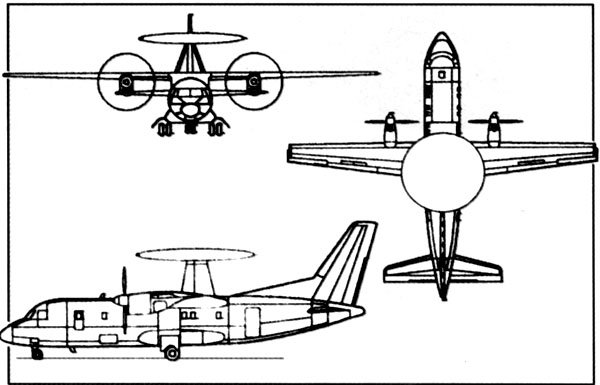
It appears Mexico with its 120 million population is considering getting into the lucrative aviation manufacturing sector. Of course this will mean that they must acquire some expertise and some trading partners to sell to once they build these aircraft. Mexico is looking to team up with the Ukraine to make this happen. Vicenti Fox. Mexico's President met with the Ukraine and offered to build the An-140. Also to do major repairs there as well. The An-140 is a twin engine turbo prop aircraft used primarily for passengers and cargo; although it has also been used in an AWCS configuration for military and security purposes in Russia. Here is a picture of the aircraft:

http://aviamir.com.ua/Files/Images/An-140-1.jpg

http://homepage.eircom.net/~steven/images/an140awacs.jpg

In addition to working on the An-140 Mexico also discussed with President of Ukraine Viktor Yushchenko the possibility of building and or repairing the Mi Helicopters for the Ukraine. Mexico is sending its team of aviation specialists to the Ukraine to look into manufacturing new parts, spare parts, fuselages and wing assemblies as well as setting up certified repair stations. The Ukrainian President announced the two countries may draft an agreement to protect their investments and relief for problems with double taxation.

This agreement does not affect the United States in anyway, but the Mi Helicopter series does include the Mi-24 pictured here:

http://www.warmachines.50g.com/_framed/50g/warmachines/helicopters/mi-24/mi-24_1.jpg

Not so sure this is a good piece of news for the Department of Homeland Security? That is rather close to our already leaking borders. Although some say that it might keep workers in Mexico and out of our country. Currently there are estimated some 15 million plus illegal aliens from Mexico in the US and the number grows each day.

"Lance Winslow" - If you have innovative thoughts and unique perspectives, come think with Lance; <a target="_new" href="http://www.WorldThinkTank.net/wttbbs">www.WorldThinkTank.net/wttbbs</a>

Several Facts to Obtaining Cheap Airfares

Airfares

Need a vacation but dont want to stay around town? Want to go somewhere exotic, somewhere different? Want to fly but worried about the airfare? Sourcing the cheapest airfare available has been made easier with competition growing between travel agencies as people realize that a vacation need not be all that expensive. Airfare can be a hindrance to the best of vacation plans but it need not be. With so many travel companies vying for your business securing cheaper airfare is a given!

The airline companies set airfare prices, with travel agents adding a mark up to the wholesale price. More often than not, the advertised price of an airfare does not include any government taxes or duties. So additional charges such, as these need to be figured into your airfare budget.

Aside from the airline companies and travel agencies setting the price, it is important to be aware that many things determine airfare prices, but the most important influence on price is the final destination. Other influences include but are not limited to:

- The type of airline class you prefer; do you want comfort or are you ok with being a tad squashed,

- The location of your seat; window seat or inside,

- The time of day you are prepared to travel; day or night,

- How close you book to your departure date; booking closer to your departure date may increase your airfare unless you secure a last minute deal, and

- Whether your airfare is part of an all inclusive holiday package; more often than not for these all inclusive packages the airfare has been given with a huge discount as a deal between the resort or hotel, the airline and travel agent.

Therefore, being the money savvy person that you are; you need to take into consideration all of the above points before you start searching for an airfare that fits within your budget. Researching airfare is critical to securing the cheapest rate. Research has definitely been made easy thanks to the World Wide Web.

Increasingly, last minute deal websites are being developed and there are some great bargains to be had particularly with regard to airfare rates. Checking often and subscribing to these last minute deal web sites will ensure that your vacation is one to remember without the added burden of over spending on airfare!

Corsa Dirfes is the owner of <a target="_new" href="http://www.airfareson.com">Airfares ON</a> which is a premier resource for Airfares information. for more information, go to <a target="_new" href="http://www.airfareson.com">http://www.airfareson.com</a>

Cracking Aircraft Windows with Directed Sound Waves

Today our modern military scientists have found many uses for directed energy beams. Some of these uses include communication, non-lethal weapons and high-energy lasers. Directed sound waves and harmonics maybe the answer to stopping manned aircraft in the battlespace on its way to find our blue force as its next target. Using such directed waves we can penetrate and crack aircraft canopies, rendering the aircraft useless to continue the mission. Or so disrupt the enemies mission that it is forced to turn back completely and abort or even force the enemy pilot to eject immediately.

Currently we have talking glass technologies, which vibrate windows and can be used to whisper sounds. These same technologies, which are currently produced with acoustic transducers attached to the windows can also be replicated from a distance with directed sound. Since glass, Plexiglas etc are brittle a certain type of vibration will cause them to crack and thus a breach in the aircraft at altitudes above a certain height become immediate problems for the pilot, taking precedence over mission and going to the heart of a human's need for self preservation.

Recently a Delta Airlines flight had to make an emergency landing after the airplane's windshield cracked. Often flights with breaches in the pressurization system are forced to land or fly below twelve thousand five hundred feet where the oxygen percentages in the air are livable for humans. When even a crack appears pilots must take action as the concerns of loss of cabin pressure take priority.

A weapon of this type, which can crack windshields of aircraft would deter manned aircraft from entering a safety zone containing our military or civilian assets. Such a weapon would be inexpensive to use and save millions of dollars in anti-aircraft missiles, which often fail to hit their mark when the enemy has sufficient counter measures.

"Lance Winslow" - If you have innovative thoughts and unique perspectives, come think with Lance; <a target="_new" href="http://www.WorldThinkTank.net/wttbbs">www.WorldThinkTank.net/wttbbs</a>

วันเสาร์ที่ 24 มกราคม พ.ศ. 2552

Private Jets: 4 Leaders in Fractional Flying

Fractional flying, you say. Is that division? Well, sort of. Fractional flying is where you, the customer, can own a "share" in a private jet. In most cases these shares allow you to own as much as 1/4 to as little as 1/32 of a 40 million dollar private jet. Where full ownership may be out of reach for you fractional ownership may be the best option to getting you in the air. Let's take a look at four companies offering fractional flying in the US.

1. Netjets. Richard Santulli is the brainchild behind modern fractional jet flying as he founded Netjets on this principle in 1986. The concept has grown from selling shares in a few jets to selling shares in sixteen different models. Indeed, aircraft much "cheaper" than a 40 million dollar jet can also be shared starting with the Hawker 400 XP and working up to a BBJ [Boeing Business Jet]. Santulli sold out to Warren Buffett of Berkshire Hathaway in 1998, but he remains a key player with the company.

2. Flexjet. Not to be left out in the cold, Canadian aircraft maker, Bombardier, jumped into the fray with AMR Combs [parent company of American Airlines] and started Business JetSolutions. In 1997, Bombardier bought out AMR Comb's share and renamed the company Flexjet. Today, Flexjet customers can purchase shares in various Learjets [now owned by Bombardier] and Canadair [another Bombardier make] aircraft.

3. Flight Options. Raytheon Aircraft Company is the principle owner of Flight Options which was founded in 1998. Raytheon aircraft, which include various Hawker models, are some of the aircraft utilized in Flight Options's fleet. Other aircraft flown by Flight Options are the Embraer Legacy and the Citation X.

4. CitationShares. Launched in 2000 as a joint partnership between TAG Aviation, an aircraft management and operations company, and the Cessna Aircraft Company. CitationShares features three Citation models produced by aircraft manufacturer Cessna: the CJ1, the Bravo, and the Excel.

Other things to consider when purchasing your fractional share include the following:

1. Acquisition Cost. When you purchase your share, how long do you actually own that share? Is it renewable and for how much? Is there any additional outlay in capital for you during the time that you own a share?

2. Management Fees. Monthly charges will be billed separately and include: pilot salaries and training, storage [hangaring] of the aircraft, insurance, and support.

3. Hourly Fees. During the time you are actually flying -- and also for a predetermined amount of time before takeoff and after touching down -- you will be assessed hourly charges to cover catering, maintenance, fuel, and landing fees.

4. Taxes. Fuel surcharges, international taxes, and federal surcharge taxes will also be assessed.

Fractional flying presents to you, the customer, options that were previously available only to those who owned a private jet. If convenience, luxury, safety/security, and price are important to you than a share in a jet is an option worth exploring. The four featured operators are leaders in the industry and can provide for you more detailed information.

Matt Keegan writes on aviation issues and manages two important business aviation sites: <a target="_new" href="http://aviationemploymentboard.net/forum">http://aviationemploymentboard.net/forum</a> and <a target="_new" href="http://corporateflyer.net/forum">http://corporateflyer.net/forum</a>

China is Starting to Build Military Fighter Trainers

China is entering the jet fighter trainer business and set to start building a completely new generation of trainers called the JL-19 Mountain Eagle. The jet is also know as the FTC-2000, which is interesting, as the FTC is the agency which is crippling our US Corporations competitiveness over seas now. The JL-19 or FTC 2000 aircraft is a tandem two-seat, single engine jet fighter aircraft developed by Guizhou Aviation Industry. This is the same manufacturer of the JJ-7 fighter trainer now being used in the Chinese Air Force.

There are already plans to have no less than 10 aircraft to be delivered by the end of the year, Chinese Year. The first flight of this new aircraft was made in December of 2003 and mass production is expected to start by the end of 2005. China needs this aircraft to train it's pilots to fly the Su-27s and Su-30 Russian Fighters that they have ordered. The little trainer has excellent performance and can go over 1.5 Mach or one and a half times the speed of sound. These same aircraft are expected to flood the developing nations with fighter planes. In fact there is already talk of Mexico and other middle-eastern nations buying them too. The Guihou Group stated in an interview with sinodaily.com:

"Since it is both a fighter and trainer, some small countries, lacking a large fleet of fighter planes, could use the Mountain Eagle to train their fighter pilots in peace time, arming it for use as a fighter in war time."

The JL-19 Mountain Eagle or the FTC-2000 it's NATO number will use the Chinese built WP-13 jet engine. This would be one terrific little fighter plane to own for personal use and fly around as a sport plane too. And if you have the money, they would sell you one too. Think about it.

"Lance Winslow" - If you have innovative thoughts and unique perspectives, come think with Lance; <a target="_new" href="http://www.WorldThinkTank.net/wttbbs">www.WorldThinkTank.net/wttbbs</a>

วันศุกร์ที่ 23 มกราคม พ.ศ. 2552

Jet Lag ? 5 In-flight Tips

The secret to combating jet lag, and arriving at your destination with little or no jet lag, lies in sound preparation well in advance of your date of travel. This, however, is only the foundation of your "anti jet lag" plan and all of your sound preparatory work will be wasted if you don't also ensure that you follow a sensible routine during your flight.

Here are just five of the many things that you can do during your flight to reduce, or eliminate, the effects of jet lag:

1. Make sure that you get adequate rest.

Many people find that they can't, or simply don't want to, sleep during their flight. This is fine, although trying to get some sleep can certainly be helpful. If you can't, or don't want to sleep, then you should at least ensure that you take the opportunity to rest and should also try to plan your rest so that you will be aligned as far as is possible with the time at your destination.

If, for example, your twelve hour flight will get you to your destination early in the morning, try to get some sleep during the second half of the flight.

2. Make use of simple, natural sleep remedies.

If sleeping during the flight proves difficult, even with the use of such things as ear plugs and an eye mask to help simulate nighttime conditions, you may be tempted to resort to the use of sleeping pills. Don't succumb to this temptation!

A discussion on the rights and wrongs of using sleeping pills is beyond the scope of this article (although I do cover the subject in depth in articles and elsewhere on http://help-me-to-sleep.com) but, suffice it to say, that the use of sleeping pills during your flight will add to the problem of jet lag, rather than assist in reducing its effects.

There are however a number of natural sleep remedies available today which can provide a very effective solution. Of these chamomile and lavender, often taken in the form of a tea, are perhaps the best known. If these don't work in your particular case, then a slightly stronger and extremely good alternative would be either valerian root or melatonin.

3. Relax to soft, soothing music.

As an alternative to sleep, or indeed in addition to sleeping, try listening to soft, soothing music in preference to watching the in-flight movies. Even better; try some form of gentle meditation or relaxation exercises. This will not only help reduce the effects of jet lag, but will also help maintain a normal level of blood pressure and good circulation throughout a long flight.

4. Ensure that you take some exercise.

Although it can be tempting to stay in your seat throughout the flight, getting up from time to time and strolling around the cabin will refresh your body and promote both mental and physical activity. Some light exercise, particularly for your legs, will also help prevent the possibility of deep vein thrombosis ? clots forming in the legs.

5 Keep yourself well hydrated.

The artificial environment created within the aircraft cabin by both pressurization and forced ventilation can lead to dehydration and so it is extremely important that you maintain your fluid levels. Drink plenty of water or fruit juice, but avoid tea and coffee and other caffeinated drinks. You should also avoid carbonated drinks and alcohol.

One part of the secret to arriving refreshed at your destination after a long flight is to ensure that you take the opportunity to rest and relax during the flight and that you avoid stimulants. Taking the simple steps outlined here will certainly go a long way towards preventing jet lag.

Copyright 2005 Donald Saunders

Donald Saunders is the author of a number of health related publications on the subject of <a href="http://help-me-to-sleep.com/index.html" target="_blank">coping with insomnia</a> and <a href="http://help-me-to-sleep.com/jet-lag/index.html" target="_blank">overcoming jet lag</a>. Drop by his website today and pick up your free copy of "How To Get A Good Night's Sleep".

Young Men Trying to Imitate the 9-11 Scenario, Part I

Why did the young man near Tampa, FL fly a little private aircraft into the Bank of America building there? A Cessna 152; What damage could that possibly do? We must figure out a way in preventing our youth from growing up into homegrown terrorists.

Young men crashing into buildings in airplanes is simply insane; how could this happen. Although in the scheme of things this act in itself is irrelevant to life on Earth, we should explore it. First let's say that we need a mentoring program for those who excel in whatever it is they choose. The young man in Tampa chose to fly. He caught the flying bug as aviators say and that was that. Many others too had caught that bug. Myself included.

My brother flies a C-130 for the US Marines, my dad was a Navy jet jock and grandfathers flew in WWII. Realize that many other famous people caught the flying bug. Including our current President and his father also a President and pilot in WWII. So we cannot condemn a person who wants to reach beyond the norm, someone who wants to achieve, some one who strives and ultimately fulfills that need through flight. There was nothing wrong with a young man wishing to fly. It is actually quite admirable.

While other kids are poking pencils at each other in classrooms, ditching school, and cheating on tests, this young man was studying his homework during his classes to give him extra time to fly, his true passion. So do we need more FAA rules against flying at a young age? No. We need a better mentoring program for those who excel in other areas besides the typical sports, student government, grades, music or extra curricular activities that all kids do. For those who are different, want to achieve different objectives or are simply not cut from the same mold, we need to pay attention to these needs. These are also our future leaders. Gates for instance took apart computers designed little programs and operating systems and we called him a geek. Why? We needed his expertise and driven nature to help propel PC use, which has now simplified life for nearly one-third the population on the Planet and helped in the productivity and betterment of all mankind.

If you read biographies as I do, at least a few hundred of them of great people, you will see that many achieve or excel at an early age at something way away from what we call the norm. Einstein was thrown out of school, they said he would not amount to anything. Even on the dark side. The little Hitler youth who studied in Vienna to become an architect was unable to do go after his dream. Had he had a mentor he could have followed in those years after his mother died or even a supporting father, his innate abilities to draw buildings, may have helped him become one the world's leading architects of the time. Fore it is often the drive and human spirit which is the wild card of human endeavor. But instead we all know what happened.

There is a program for those young flying kids. It is called the Civil Air Patrol. I was a member. It is to develop strong aerospace leaders for the future. Yet the IRS came down on private pilots and aircraft owners for using it as a tax write off for fuel for their private planes. Many of these pilots used this extra fuels to take students or cadets in the CAP-Civil Air Patrol up for rides. They took the youth on field trip type weekend events and searches for crashed or lost aircraft and looked for the locations of ELT-Emergency Locator transmissions.

Our company, The Aircraft Wash Guys, www.aircraftwashguys.com , has helped raise money for the CAP with fundraising events in the past. To help build leadership and camaraderie without giving away free fish, teaching them to fish if you will. This is something that the young man who flew into the B of A building was clearly missing. Others in his peer group and older people who understood his dreams to fly. His counselor at school told us of the young man's statement; &quot;I wish I could do something to help my country, I would like to join the air force and fly an aircraft to help.&quot; That does not sound like a bad or evil person to me. At the airport he washed aircraft and he traded for pilots lessons. I did the same thing as young person. It takes a lot of aircraft washes to pay for fuel and instructor and a plane for an hour these days. With liability insurance at FBOs-Fixed Base Operators so high; nearly 30% of the cost to rent the damn airplane is insurance. Why? Attorneys. They sue every time someone crashes. They sue the manufacturer Cessna, they sue the flight school, they sue the estates of the instructors, the pilot himself and any other person they can think of. We are talking millions, not thousands. That is the problem with the cost. Read Airport Business, Flying, AOPA, Sport Aviation or Private Pilot, you will see. When the luxury tax law was enacted 30 years ago the aviation market tanked and never really recovered. People who had aircraft they bought leased them back to a flight school to afford the monthly payments. It worked good and lots of aircraft and lots of people learning to fly. That was wonderful for general aviation, aircraft sales prices and the entire general aviation industry. With a lease backed plane to an FBO an owner could also have the ITC-Investment Tax Credits on the purchase and then write off the payments. This caused more aircraft to be sold and Piper, Cessna, Mooney, Beechcraft, Rockwell, Aeronica, Robinson, Grumman all did well in aviation.

End Part I

"Lance Winslow" - If you have innovative thoughts and unique perspectives, come think with Lance; <a target="_new" href="http://www.WorldThinkTank.net/wttbbs">www.WorldThinkTank.net/wttbbs</a>